Corticosteroid use
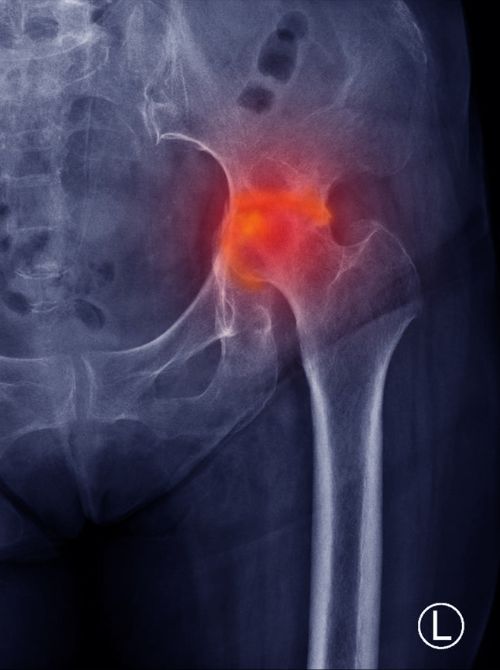
This is one of the most common causes. High-doses or prolonged courses of corticosteroids (often given for inflammatory conditions, autoimmune disease, or following organ transplantation) are strongly associated with AVN. COVID-19-related corticosteroid treatment has been associated with an increase in AVN cases.
Haematological conditions
In conditions like sickle cell disease, abnormal red blood cells can obstruct small blood vessels. This is a significant cause of AVN, often presenting at a young age.
Trauma
AVN is a recognised complication following certain hip fractures and traumatic dislocations as they can disrupt the blood vessels supplying the femoral head.
Alcohol excess
Chronic heavy alcohol use impairs bone microcirculation which can make developing AVN more likely.
Idiopathic
In some cases, no single cause is identified.
Hip or groin pain
The most common first symptom. Often insidious in onset, typically in the groin or front of the hip and sometimes radiating to the buttock or thigh.
Pain with weight bearing
Worsens with activity and improves with rest in earlier stages. As the condition advances the pain will eventually be present at rest.
Reduced range of motion
This happens as the femoral head loses structural integrity and the joint surface becomes increasingly damaged.
Limping
As pain and functional limitation increase.
Surgery is the only definitive treatment for AVN. However, protected weight bearing and pain management are used to manage symptoms and reduce load on the affected joint during monitoring and waiting for other treatments.
Core decompression
This is an option for early-stage AVN (pre-collapse, Stages I–II). It involves drilling holes into the femoral head to reduce intraosseous pressure, improve blood flow, and potentially slow progression. This may be combined with bone grafting or other biological treatments to support healing.
Vascularised fibular grafting
A more complex early-stage procedure, transferring a segment of the patient's own fibula, with its blood supply, to the necrotic area of the femoral head. This provides structural support and a new blood supply. These procedures require subspecialist expertise, and OI can advise on the most appropriate referral pathway.
Hip replacement: the Kley Rapid Hip
Once the femoral head has collapsed and the joint surface is damaged (typically Stage III or IV) hip replacement is the definitive treatment. AVN frequently leads to hip replacement at a younger age than osteoarthritis, making the specific advantages of the Kley Rapid Hip (zero dislocations, minimal infection risk, rapid recovery, and modern implant longevity) particularly relevant for this patient group. Hip replacement for AVN can be technically more complex than standard arthroplasty, due to femoral head collapse and the bone quality changes associated with some AVN causes (particularly steroid-related). The Kley Rapid Hip's pre-operative computer simulation accounts for this anatomical complexity in surgical planning.
Not all patients require a hip replacement. The right treatment depends on your stage at diagnosis. Our consultation will give you a clear, honest answer about which option is appropriate for you.
Patients on long-term high-dose corticosteroids, or those with sickle cell disease or a history of significant hip trauma, should be alert to the development of hip or groin pain and seek early assessment rather than waiting for symptoms to become severe. Early identification of AVN, before femoral head collapse preserves more treatment options.